AI for Construction: Why the Industry's Smallest Players Have the Most to Gain
The construction industry spends $2 trillion a year in the US alone, yet runs on paper, phone calls, and gut instinct. For small contractors, that's not a problem—it's an opportunity.
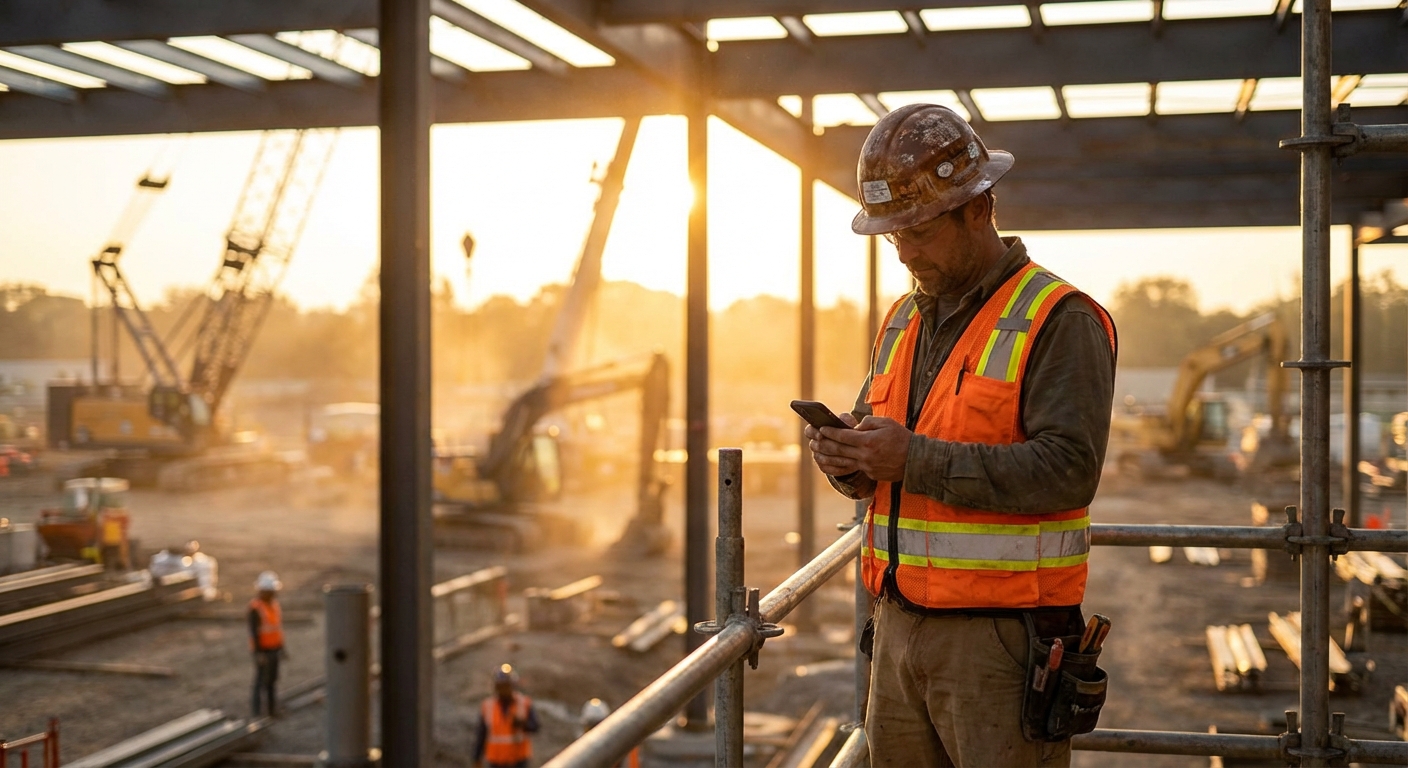
Construction is a $2 trillion industry in the United States. It's also one of the least digitized sectors of the economy.
While other industries have spent the last decade automating, optimizing, and eliminating inefficiencies, construction productivity has remained essentially flat since the 1990s. The work still runs on paper blueprints, handwritten change orders, phone calls that go to voicemail, and spreadsheets held together by hope.
For large general contractors, AI adoption is finally picking up—about 39% of firms with over $50 million in revenue are now using AI tools, up from just 8% in 2020. But small contractors? They're barely on the radar.
That gap isn't a weakness. It's an opportunity.
The Small Contractor's Hidden Advantage
Here's what most people miss about construction technology: the smaller you are, the faster you can move.
A large GC trying to implement new software has to coordinate across dozens of project managers, train hundreds of field workers, integrate with existing enterprise systems, and navigate corporate politics. A single technology decision can take eighteen months to execute.
A three-person electrical contracting firm? They can try something new tomorrow morning. If it doesn't work, they try something else next week. No committees. No change management processes. No IT department to convince.
This agility matters enormously right now, because AI tools for construction have finally gotten simple enough for non-technical users. You don't need a software team. You don't need a consultant. You need a few hours to experiment.
Where AI Actually Helps Small Contractors
Forget the flashy stuff—autonomous bricklaying robots and AI-generated building designs. Those make for good headlines but aren't relevant to a plumbing contractor bidding residential remodels.
The AI opportunities for small contractors are mundane, practical, and immediately valuable.
Estimating and Takeoffs
Every contractor knows the pain of estimates. You spend hours measuring plans, calculating materials, looking up current pricing, and building quotes—only to lose the job anyway, or win it and realize you underbid.
AI-powered estimating tools can analyze plans and generate material takeoffs in minutes instead of hours. More importantly, they get better at predicting actual costs based on your historical data. The more jobs you run through them, the more accurate your bids become.
For a small contractor doing ten bids per week, cutting estimate time from two hours to thirty minutes means getting back fifteen hours. That's almost two full days you can spend on actual work.
Scheduling and Crew Coordination
Small contractors live and die by scheduling. Showing up when the site isn't ready wastes a crew day. Miscommunication about timing cascades into missed deadlines and angry clients.
AI scheduling tools don't just put tasks on a calendar—they factor in dependencies, weather, material delivery times, permit requirements, and crew availability. When something changes (and something always changes), they automatically adjust downstream tasks and alert the right people.
This isn't magic. It's just the kind of coordination that's exhausting to do manually but trivial for software.
Client Communication
How many calls go to voicemail during the workday? How many texts asking 'what time will you be there?' interrupt the actual work? How many evenings get spent catching up on messages?
AI assistants can handle the routine communication automatically. Status updates go out without you drafting them. Scheduling questions get answered based on your calendar. Simple inquiries get responses immediately instead of waiting until you're off the jobsite.
Your clients get faster, more consistent communication. You get your evenings back.
Documentation and Compliance
Paperwork is the bane of every contractor's existence. Daily logs, safety documentation, inspection reports, permit applications, change orders—the administrative load never stops.
AI can generate documentation from voice notes taken on site. It can flag compliance issues before they become problems. It can organize photos and notes into structured reports automatically. The documentation still happens, but the burden shifts from your time to the software's.
The Real Barrier Isn't Technology
If AI tools for construction are this accessible, why hasn't adoption exploded among small contractors?
Partly it's awareness—contractors are busy running jobs, not researching software. The marketing for these tools often targets enterprise customers, leaving smaller firms out of the conversation.
But the bigger barrier is mindset. Construction has always been about relationships, experience, and showing up to do the work. Technology feels like a distraction from the real business.
That thinking made sense when technology required massive investment and specialist knowledge. It doesn't anymore.
The contractors who figure this out early will have a structural advantage. Better estimates mean more profitable jobs. Better scheduling means less wasted time. Better communication means happier clients who refer more work. These advantages compound.
Getting Started Without Getting Overwhelmed
The mistake most contractors make when exploring AI is trying to transform everything at once. That's the enterprise approach, and it doesn't fit how small businesses actually operate.
Instead, pick one pain point. The one that wastes the most time or causes the most frustration. For most contractors, that's either estimating or client communication.
Find one tool that addresses that specific problem. Don't worry about integration or building a complete system—just see if the tool works for how you actually operate.
Give it thirty days. If it saves time or wins more bids, keep it and expand. If it doesn't fit, move on.
The goal isn't to become a technology company. It's to free up your time for the work that actually requires your expertise—the stuff no AI can replicate.
The Window Is Open
Right now, a small electrical contractor using AI for estimates competes with one doing everything manually. The advantage goes to whoever works smarter.
In five years, AI-assisted estimating will be table stakes. The contractor still doing manual takeoffs won't be competing—they'll be losing.
Construction has been slow to change for decades. That's ending. The firms that adapt early will capture market share from those that don't. And contrary to what the enterprise vendors want you to believe, being small isn't a disadvantage in this transition.
It's exactly the opposite.
Not sure where AI fits in your construction business? Book a free assessment and we'll identify the highest-impact opportunity for your operation.
Free: AI Readiness Checklist
Find out if your business is ready for AI automation. 10 questions, 2 minutes.