Criminal Defense After-Hours Intake: Stop Missing Clients
Most criminal defense arrests happen at night -- here's how small firms automate after-hours intake so they capture every client, even at 2 AM.
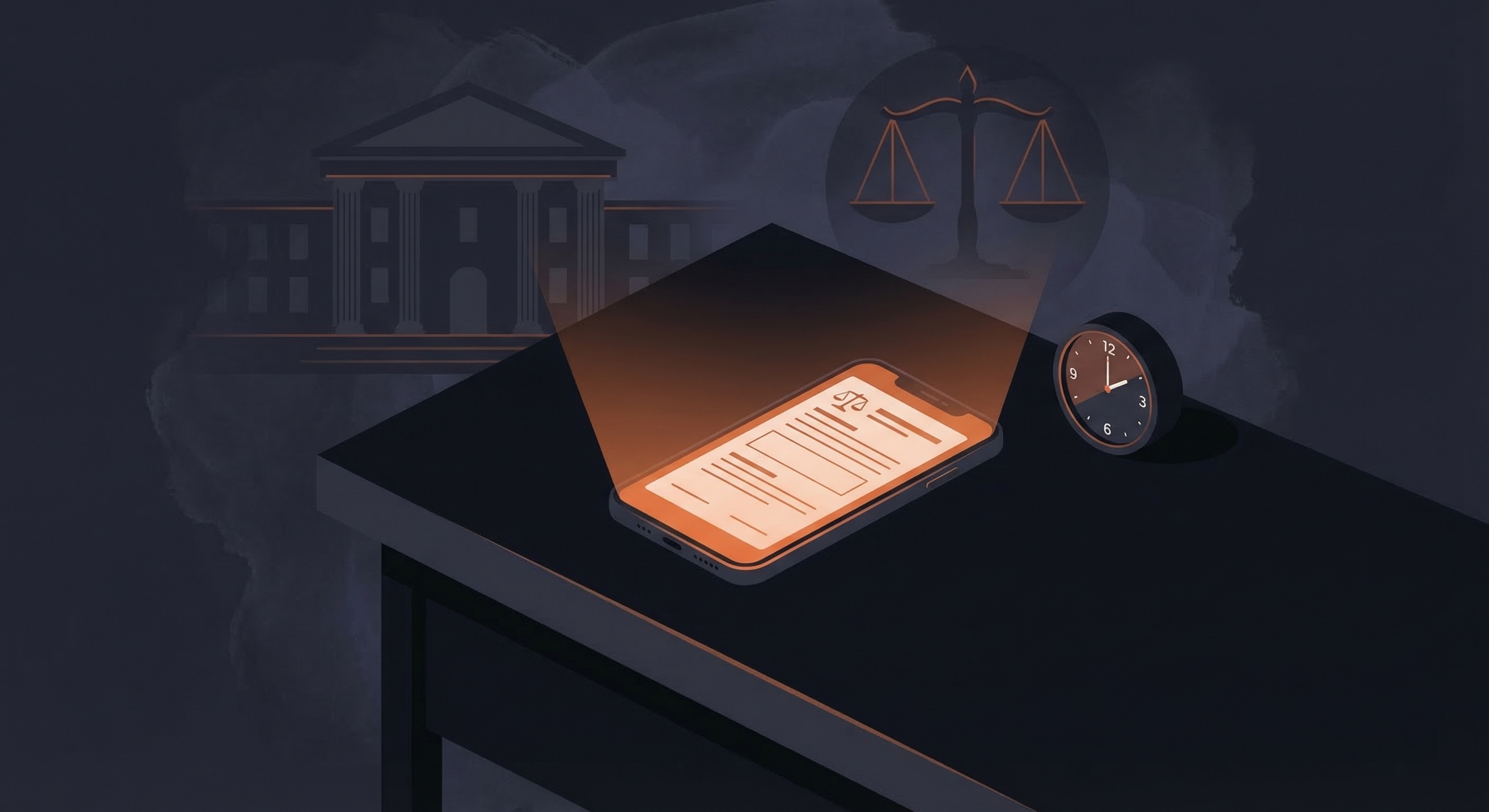
Arrests don't happen at 9 AM on a Tuesday.
They happen at midnight when someone gets pulled over in Kensington. At 2 AM after a bar fight in South Philly. At 6 AM when federal agents knock on a door in the suburbs. The person -- or their panicked family -- picks up the phone and starts calling defense attorneys.
If your firm doesn't answer, they call the next number on the list.
For criminal defense attorneys, after-hours is peak business hours. Yet most small firms run on a system that's functionally closed from 5 PM to 9 AM. A voicemail, maybe a cell number that goes to a distracted attorney who may or may not call back by morning. By then, the client has hired someone else.
This is one of the most fixable problems in a small criminal defense practice -- and most attorneys haven't fixed it yet.
Why After-Hours Intake Is Different
A new client calling a PI firm can usually wait 12 hours for a callback. The injury happened; the case isn't going anywhere overnight.
Criminal defense is different. The call comes in when:
- Someone is sitting in a holding cell and has one call
- A family member is trying to figure out which precinct their spouse is at
- A potential client just got a target letter and is scared
- Someone was released overnight and wants to lock in counsel before a morning hearing
The emotional urgency is at maximum in that window. People in that state hire fast. If you're not reachable -- or feel unreachable -- they move on.
What Most Small Firms Do (And Why It Fails)
The typical setup at a 2-5 attorney criminal defense firm:
- Main office line -- goes to voicemail after 5 PM
- Attorney cell -- published somewhere, but calls get ignored if the attorney is at dinner, asleep, or just burned out from being on call every night
- Answering service -- better, but expensive, and the operators often don't know enough about your practice to qualify a lead or answer basic questions
The answering service model has a hidden failure mode: callers figure out fast they're talking to a script-reading operator in another state, and it signals that the firm doesn't actually care enough to set up something real. It's better than voicemail, but not by much.
What Automated After-Hours Intake Actually Looks Like
Here's what a well-built after-hours intake system does:
Immediate response, any hour. When someone calls or texts after hours, they get an immediate response -- not a voicemail prompt, not a ring with no answer. The system acknowledges them right away.
Qualification questions. A basic intake flow: What's the charge or situation? What jurisdiction? Is this person currently in custody? Is there a hearing date set? These answers let you prioritize callbacks and route them to the right attorney in the morning.
Contact capture. Name, best number, email if they'll give it. This matters more than it seems -- a potential client who calls at 2 AM and hangs up without leaving info is lost forever. A good intake flow gets that contact before they go.
Urgency triage. If someone says there's a hearing tomorrow morning or someone is currently in custody, the system can flag that for an immediate attorney notification -- a text or call forwarded to whoever is on call. You set the threshold; the system handles the routing.
Morning briefing. When the attorney or paralegal walks in at 8 AM, there's already a list: who called, what they said, their contact info, urgency level. Instead of a pile of voicemails to decipher, it's a structured intake queue.
The Agile Infusion Approach
We build this kind of system for small criminal defense firms using tools that integrate with what you already have -- your phone system, your CRM (or a simple spreadsheet if that's where you are), your email.
The intake flow is customized to your practice: the questions you'd ask a new prospect, the criteria that make a case urgent, the information your attorneys need before a callback. We don't hand you a generic chatbot template and tell you to figure it out.
For a two-attorney firm in Philadelphia, the before and after looked like this:
Before: Attorneys were splitting "on-call" nights, answering their cell phones at all hours. They were exhausted, inconsistent, and still missing inquiries. New client conversion from after-hours calls was low because the attorneys were too tired to pitch well at midnight.
After: The automated system handles initial contact and intake. The attorneys only get called after hours if there's a genuine emergency -- a hearing tomorrow, someone in custody. Everything else is queued for a 9 AM review. New client conversion went up because the attorneys were rested and prepared for those callbacks.
What This Isn't
A few things worth being clear about:
This isn't replacing your attorneys. No one is having a legal strategy conversation with a bot. The automation handles the intake -- gathering information, confirming contact details, triaging urgency. The attorney relationship starts when a human picks up the phone.
This isn't a call center. We're not routing your clients to operators who read from a script. The system collects information and routes it intelligently. It feels faster and more responsive than an answering service, because it is.
This isn't complicated to set up. For a small firm, a working after-hours intake system can be operational in a week or two. The technology exists; the work is in customizing the intake flow to your practice and connecting it to your existing systems.
The Competitive Angle
Here's something worth thinking about: most criminal defense firms in a given market haven't done this yet. The attorneys who build solid after-hours intake systems are capturing the clients who used to fall through the cracks -- at every firm in their competitive set, not just their own.
When someone calls three criminal defense attorneys at 1 AM and two go to voicemail, the one that responds -- even with an automated intake flow -- wins the client. Every time.
Next Step
If your firm is losing after-hours leads to voicemail, it's worth a 30-minute conversation. We'll map out what an intake system would look like for your specific practice -- no generic templates, no software you have to maintain yourself.
Schedule a free consultation at derekschatz.io or reach out directly. The first conversation is free and we'll tell you honestly whether automation makes sense for your situation.
Free: AI Readiness Checklist
Find out if your business is ready for AI automation. 10 questions, 2 minutes.