What Happens to Your Business Data When You Close?
A startup selling shutdown business data for AI training is a sharp version of a slow-moving trend. Most businesses haven't thought through their exposure.
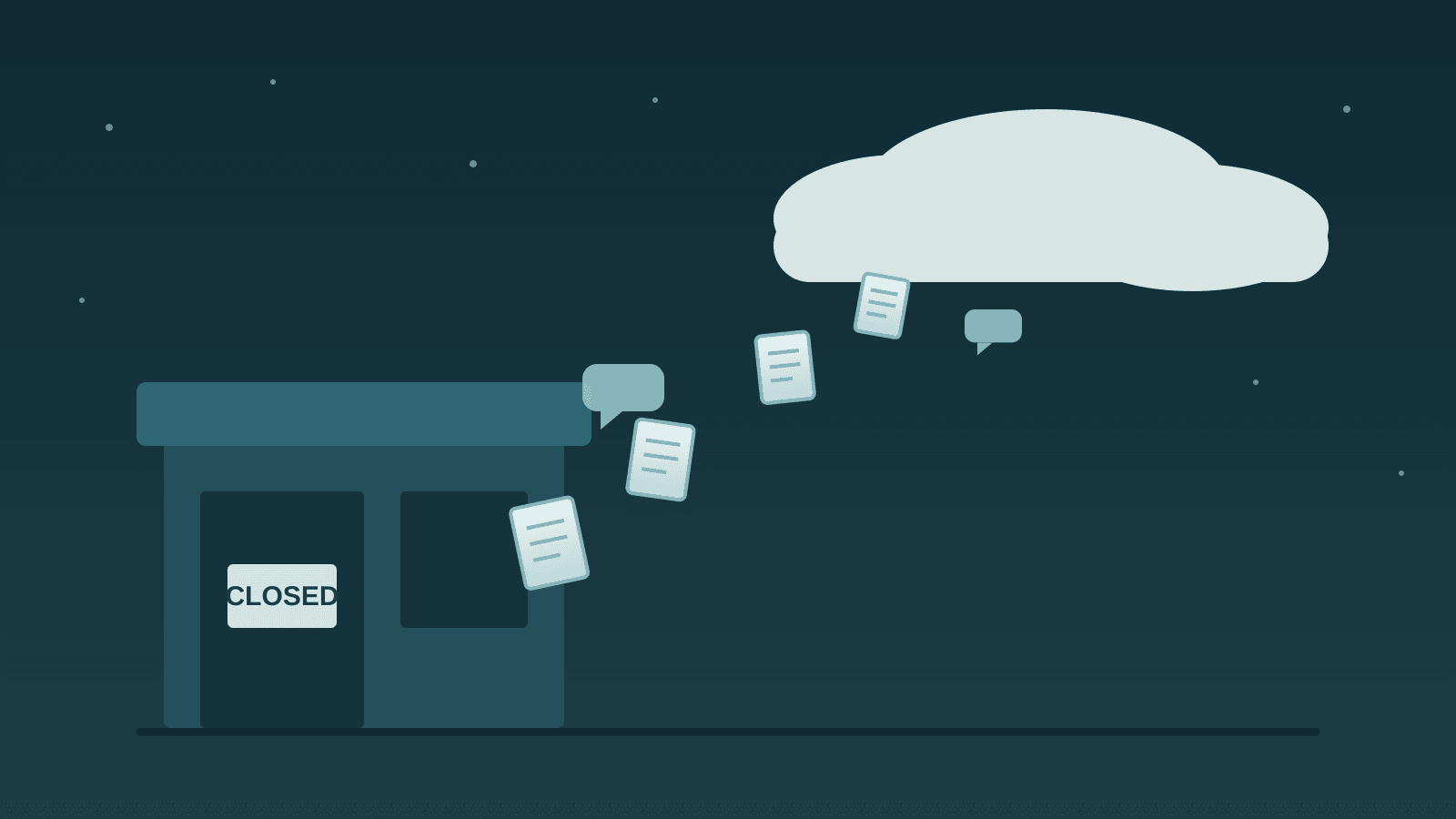
A startup called SimpleClosure helps businesses wind down cleanly. The final filings, the paperwork, the administrative weight of ending something you spent years building. It's a useful service for a genuinely hard problem.
What came out recently is that some of their customers' data, including Slack messages and internal emails from businesses in the process of shutting down, was licensed for AI training. The Verge and Forbes covered it. The details are still emerging. But the story points at something most small business owners haven't thought through.
What actually happens to your business data when things end?
Most owners have some version of the same setup. Slack. A CRM. Google Drive or something close to it. A project management tool. You connected these because they work, the monthly cost is reasonable, and having everything in the cloud means you can work from anywhere. What you probably haven't thought about is what happens to all of that data five years from now, when the tool gets acquired, when you stop paying, or when you shut things down.
Your data outlives the context in which you created it. That's always been true. What's new is that it now has a more obvious second market.
Think about how many tools you've used and abandoned over the last five years. Services that got acquired, pivoted, or quietly changed their model. When a product changes hands, the data policies often change with it. The data you created under one set of terms is now subject to another. For most tools, that transition passes without incident. But "without incident" and "without consequence" aren't the same thing.
The terms of service for most cloud tools include language about using your data to "improve products and services." That framing has been standard for years and most people have gotten comfortable ignoring it. What's changed is what improving the product actually means now. Training large language models on real business communications is genuinely valuable to AI companies. Your client intake forms, internal strategy discussions, and operations documentation are exactly the kind of content that makes AI models better at business tasks.
The business of sourcing that kind of data is real and growing. A company holding large volumes of business communications is sitting on something AI developers actively want.
I'm not saying your CRM is doing anything with your data right now. I'm saying most business owners haven't spent 20 minutes thinking about whether they'd care if it did, or under what circumstances.
Start with the three to five cloud tools where your most sensitive work actually lives. CRM, document storage, internal communications, project management. For each one, find what the terms say about data ownership if the company is sold or shuts down. You're not looking for a reason to leave the tool. You're building a clearer picture of what you own versus what you're holding in someone else's system.
The second question is more personal. What would you actually mind if it ended up in an AI's training set?
Most of what businesses generate day to day probably doesn't register: routine emails, meeting notes, scheduling threads. But detailed client files, competitive strategy, proprietary process documentation, that's a different category. Whether that material lives in a general cloud tool versus something with more deliberate controls is a decision you can make on purpose.
If you've been using the same tools for a few years, you probably have more data sitting in more places than you realize. A quarterly habit of reviewing what's in those systems and deleting what you no longer need is a reasonable practice, both for privacy and general housekeeping. Less data in more places means fewer surprises later.
The businesses that handle this well won't be the ones with the most elaborate security infrastructure. They'll be the ones that took a few hours to think through where their most sensitive work actually lives and made intentional choices before an outside event forced the conversation.
SimpleClosure is a sharp version of what that forcing looks like. Most of the time it's quieter, which is exactly why it's easy to put off.
What I'm thinking: Small business owners have no framework for thinking about data ownership at scale. We talk about "what data do I collect from customers" but almost no one asks "what data about me exists, and who else might have it?" When AI companies are actively hunting for business content to train models, the power dynamic has shifted. The question isn't whether your data has value anymore—it's whether you get to decide where it goes.
Have you thought through what would happen to your business data if your company shut down tomorrow?
Free: AI Readiness Checklist
Find out if your business is ready for AI automation. 10 questions, 2 minutes.